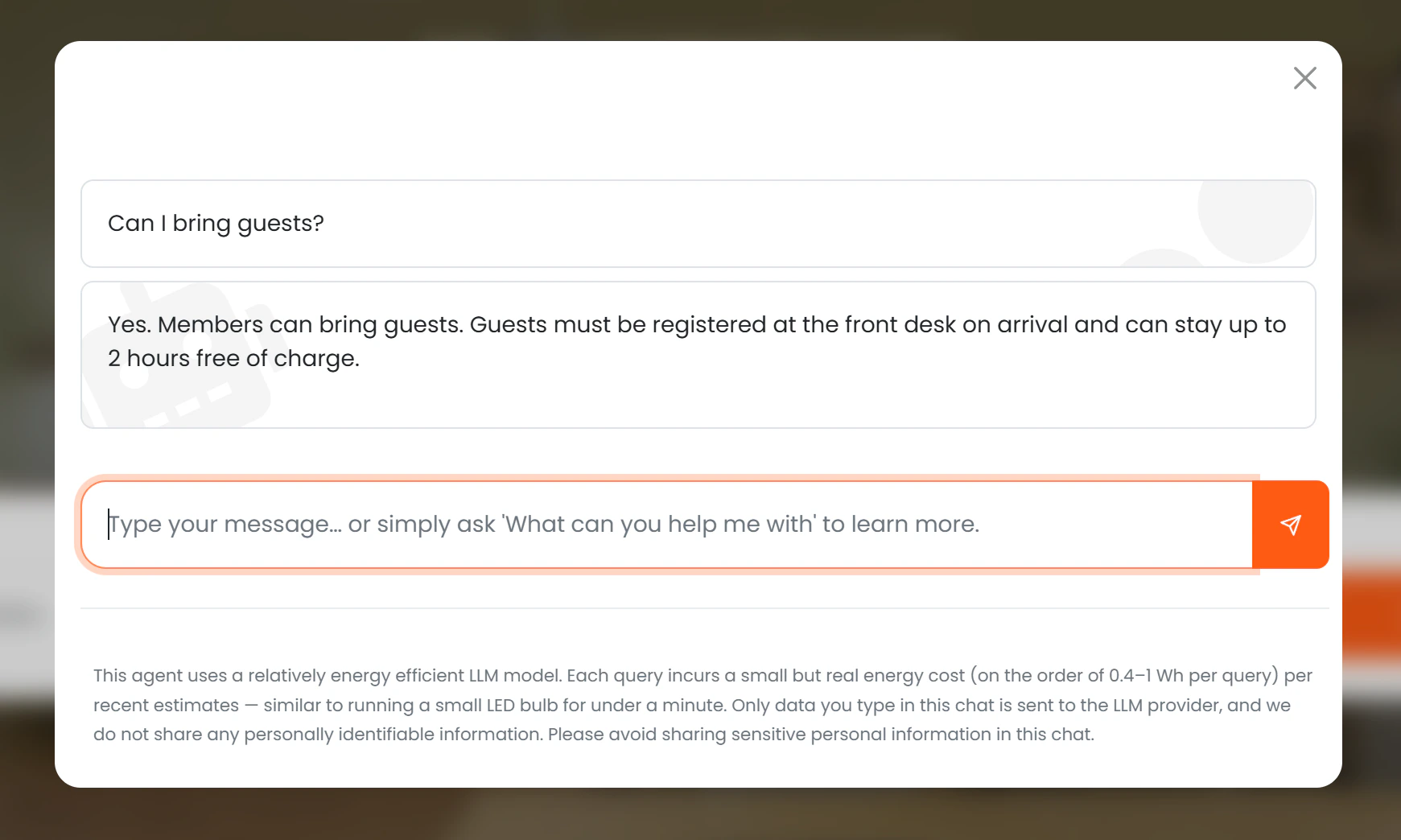
When a member or visitor asks a general question — opening hours, parking, pet policy, Wi-Fi access — the AI searches your published FAQ articles and summarises the most relevant answer.
How the search works
The search is semantic, not keyword-based. The AI understands the meaning of the question, so a question like “can I bring my dog?” will correctly find an article titled “Pet Policy” even though the words do not match exactly. This makes the AI effective at answering questions phrased in natural, conversational language.
The AI uses a similarity threshold — if no article is close enough in meaning to the question, it says clearly that it could not find an answer rather than guessing.
Access control
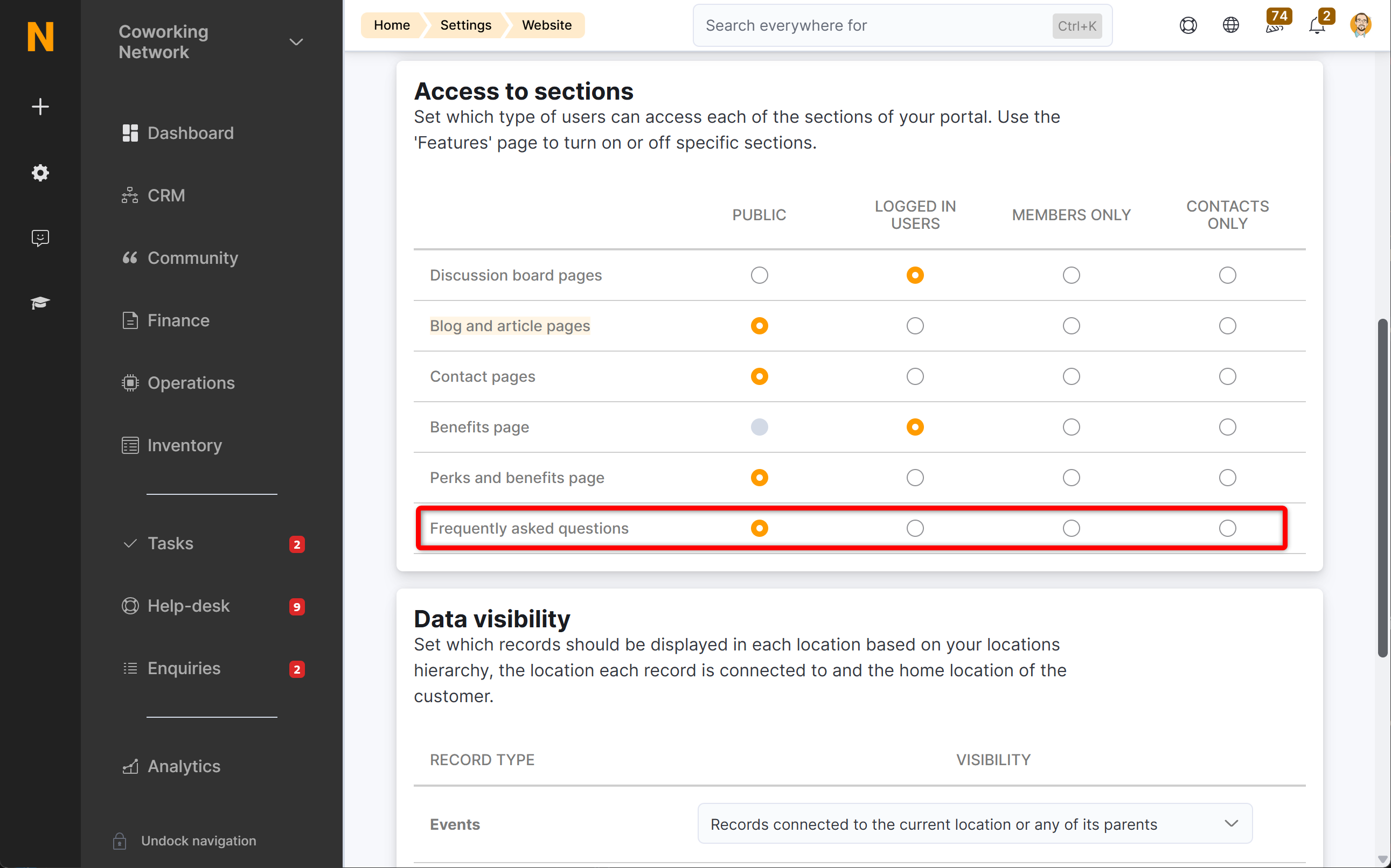
FAQ access is controlled by the Access > FAQs setting in your portal configuration:
| Setting | Who gets answers |
|---|
| Everyone | Any visitor, whether logged in or not |
| Only members | Members only — contacts and anonymous visitors are told they need to be a member |
| Only contacts | Contacts only — members and anonymous visitors are told they need to be a contact |
What to put in your FAQ articles
The AI can only answer questions that are covered by your published articles. A few tips for getting the most out of this capability:
- Write articles in plain, conversational language — the AI searches by meaning, so natural phrasing works better than formal headings.
- Cover the questions your front desk team hears most often: opening times, access, parking, printers, meeting room booking rules, guest policies, etc.
- Keep each article focused on one topic so the AI can find the most relevant match.
You do not need to do anything special to make your FAQ articles available to the AI — publishing them in Nexudus is sufficient. The AI automatically indexes them.
Conversion tracking
This capability is informational only — it does not produce a conversion record. FAQ interactions are still stored in the AI Conversations list as part of the full session history.